



Bilateral trade with Egypt seeing exponential growth despite regional geopolitical tensions: MATRADE Chairman Reezal Merican
- Global halal economy valued at $3.5 trillion, projected to near $10 trillion by 2030: Global Islamic Economy Indicator
Amr Yehia, from Kuala Lumpur
On the opening day of the 22nd Malaysia International Halal Showcase (MIHAS 2026), held in Kuala Lumpur from September 23 to 26, the world's largest halal trade fair — organized by the Malaysia External Trade Development Corporation (MATRADE) under the auspices of the Ministry of Investment, Trade and Industry (MITI) — is placing a special focus on the Middle East and Africa, while targeting sales exceeding RM 5 billion.
.jpeg)
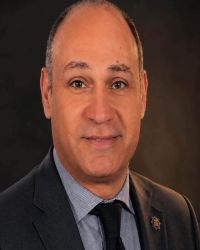
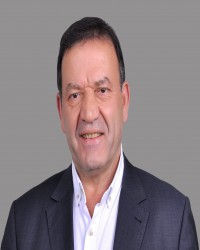
In his remarks during the press briefing , YB Dato' Seri Reezal Merican Naina Merican - Chairman of Malaysia External Trade Development Corporation (MATRADE) , said that there is an expansion in the Egyptian-Malaysian partnership, that Egypt is a strategic partner, there are capabilities for future expansion of the exhibition, adding that it is a potential host for the exhibition.
Reezal Merican thanked the Egyptian companies participating in MIHAS 2026, noting that an export acceleration mission was sent to Egypt in 2024.
He added that Egypt is one of the major markets for access, especially to the Middle East and North Africa region, highlighting Malaysia's field presence in Egypt and the unique geographical advantage of both countries.
Reezal Merican affirmed that MATRADE has an office in Cairo, adding that the Suez Canal connects East and West, which makes Egypt a strategic place, and a country to be reckoned with.
The Chairman of MATRADE acknowledged the current challenges in the region, including geopolitical conflicts in West Asia and disruptions at two vital choke points such as the Bab al-Mandab Strait and Hormuz.
He said: "Despite some challenges. Challenges of West Asia, the geopolitical conflict, although it is near Iran at almost a choke point, and we also do not forget the Red Sea, especially at Bab al-Mandab, these are other choke points, there has been a great deal of disruption in the maritime route in that area, but at the moment we are witnessing exponential growth in terms of trade between the two countries, and also for exports from Malaysia to Egypt. And we hope it will progress successfully in the coming years."
When asked about potential Malaysian investments in the Suez Canal industrial zone and whether MATRADE has promising plans there, he linked that to the global expansion strategy of the MIHAS exhibition itself.
Reezal Merican revealed that there are many requests to hold MIHAS outside Kuala Lumpur, a strategy he started during his tenure.
He explained: "Cairo may also be a suggested location, Cairo is a gateway to Africa, the next stop was Shanghai, and I will not rule out Cairo, Egypt is a large economic gateway through which we can also cover the African continent."
He continued: "There have been a lot of requests asking us to hold MIHAS outside Kuala Lumpur. We have done it twice, I brought MIHAS to Dubai. In conjunction with the Middle East Natural and Organic Expo, because Dubai is located right in the middle of the Middle East, and if you go to Dubai, it is just one flight away from any major city. And Dubai is known for hosting very prestigious expos."
He said: "We moved the exhibition to be closer to buyers who find it difficult to travel to Malaysia, from Chile and South America for example, citing the proverb 'If you cannot bring the mountain to Muhammad, bring Muhammad to the mountain'."
He stressed the transformation of Africa as a large market, noting that the continent has grown from 900 million people to 1.4 billion people across 54 countries, and that democratic transformation has made it more vibrant and promising.
On how African countries can benefit from the halal economy, Reezal Merican stressed that halal is much bigger than just food and beverages: "Currently we are exploring less than 1% of the halal economy, it is expanding and now stands at 3.5 trillion US dollars according to the Global Islamic Economy Indicator, and it is rising sharply. It is expected to reach nearly 10 trillion by 2030."
Reezal Merican affirmed that halal trade is not a religious ritual but traceability and sustainability, saying: "Halal does not really refer to a religious ritual of Islam as a religion. Halal represents cleanliness, halal represents health, halal represents authenticity, halal also represents traceability, halal also represents what we call sustainability, so if you choose a halal product, you are actually choosing a safe product."

He gave an example of New Zealand, a non-Muslim majority country where he said about 70% of its slaughterhouses are halal compliant because it is one of the largest producers of livestock and the majority of consumers globally are Muslims.
Regarding the MIHAS exhibition itself, Reezal Merican pointed to the scale and the traditional working mechanism before artificial intelligence: everything was done physically, we have 47 offices around the world, the second largest Malaysian government office operating on foreign soil, so using AI, all requests are pre-screened, handled carefully, and chosen carefully, so that when they come today to the exhibition, the chances of mismatch will be almost zero, now we introduce AI in MIHAS.
He added: "Everyone who comes here can download MIHAS AI, because they may not be able to cover everything, they can tell the system their desires, they will be accompanied by agents. They call it agentic AI, an agent for you, so they will say their desires, for example, I want palm oil. I want palm derivatives, I want cooking oil, so your AI will intelligently connect with the exhibitors' AI and other AIs, whoever the sellers are."

He added that the AI platform will be available 365 days a year for virtual communication 24 hours a day, translated into eight languages including English, Malay, Indonesian, Russian, French, Spanish and Mandarin Chinese, and uses "Salam AI" for translation. He also said he demanded the addition of African languages such as Wolof, Swahili, Yoruba and Hausa.
Regarding halal certificates, he stressed that the Malaysian halal standard of JAKIM is considered the gold standard, with a comprehensive process covering ingredients, packaging and logistics to avoid cross-contamination, and that JAKIM now cooperates with 94 certifying bodies.



Yorum Yazın
Facebook Yorum