






Arab League to Launch the Arab Declaration on Tolerance and Peace
Amr Yehia
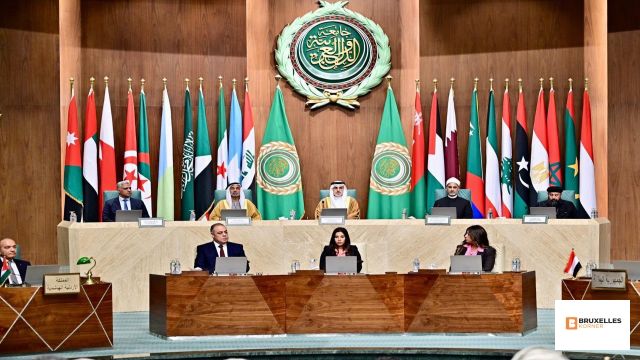
The Arab Conference on Tolerance and Peace kicked off at the headquarters of the General Secretariat of the Arab League. The conference was organized by the League of Arab States in cooperation with the Global Council for Tolerance and Peace, coinciding with the International Day for Tolerance, established by the United Nations General Assembly, which called on states to strengthen efforts to spread the values of tolerance.

The conference witnessed the official launch of the Arab Declaration on Tolerance and Peace, after its adoption by the League Council at the ministerial level, in the presence of Ambassador Sheikh Mohammed bin Daij Al Khalifa, Assistant Secretary-General and Head of the Social Affairs Sector, and Dr. Ahmed bin Mohammed Al Jarwan, President of the Global Council for Tolerance and Peace, with the participation of the Permanent Representatives of member states, representatives of the Minister of Awqaf and the Egyptian Church, religious, intellectual and academic leaders, and representatives of regional and international institutions and organizations and bodies concerned with dialogue and culture.
Ambassador Sheikh Mohammed bin Daij Al Khalifa said the meeting acquires special importance for what it represents in terms of a common will to build a more secure, stable and humane society, stressing the need to entrench a culture of tolerance and peace in the world as a basis for building bridges of communication and rapprochement between peoples, promoting shared values and respect for diversity as a source of human enrichment, and supporting sustainable development, peace and societal security.
He pointed out that our world today, despite great scientific and technological progress, still faces profound challenges that threaten the security and stability of societies, most notably the widening gap between cultures and peoples, the growth of stereotypes and prejudices, the exploitation of religious, cultural and ethnic diversity to fuel conflicts, in addition to the escalation of hate speech, intolerance and discrimination.
He affirmed that the League of Arab States has made sustained efforts to promote dialogue between cultures and civilizations, and to entrench the values of diversity, acceptance of the other and tolerance, in cooperation with international and religious bodies and relevant institutions, and that these efforts came in implementation of the League's decisions at the ministerial level, and out of keenness to turn principles into implementable programs and initiatives.
He added that the General Secretariat of the League launched a scientific track to confront discrimination against Islam and Muslims, through conferences and programs that address intellectual and social challenges, and seek practical solutions that contribute to achieving societal stability and peace and confronting misleading stereotypes about Muslims.
He explained that the General Secretariat laid down in 2019, in cooperation with the Global Council for Tolerance and Peace, the foundations of partnership based on a common desire to support the values of tolerance and peace in the Arab world, and that the League organized in October 2022 the Conference on Tolerance, Peace and Sustainable Development in the Arab World at the General Secretariat headquarters, with the participation of religious leaders, ministers and thinkers. The conference concluded with a recommendation to prepare an Arab Declaration on Tolerance and Peace.
He pointed out that the Declaration was adopted by the Council of the League of Arab States at the ministerial level under Resolution 9301 issued by the 166th session, and that the resolution urged Arab states to implement the contents of the Declaration and achieve its objectives in coordination with the General Secretariat, represented by the Social Affairs Sector, the Department of Culture and Dialogue of Civilizations.
He affirmed that the Declaration highlights the importance of the role of religious institutions in entrenching the values of tolerance and peace and rejecting hatred, extremism and racism, the role of education in confronting ideas based on religious, ethnic or sectarian discrimination, and the role of cultural and social institutions in spreading the values of tolerance and human rights, stressing the need to confront the use of digital technology and artificial intelligence in fueling strife and spreading hatred, and to activate the role of youth, women and civil society institutions in spreading a culture of peace through awareness programs, joint initiatives and spaces for dialogue between civilizations and cultures.
He stressed that sustainable peace cannot be achieved without justice, respect for international conventions, and protection of the rights of the Palestinian people and their right to establish their independent state with East Jerusalem as its capital, in accordance with the resolutions of international legitimacy and the Arab Peace Initiative.
He renewed the rejection of all forms of racial discrimination and religious and ethnic hatred practiced by the occupation authorities in the occupied territories, stressing the need to protect holy sites and human and cultural heritage, preserve the Arab, Islamic and Palestinian identity of the city of Jerusalem, and protect Palestinian heritage in Gaza and the rest of the occupied Palestinian territories.
For his part, Dr. Ahmed bin Mohammed Al Jarwan, President of the Global Council for Tolerance and Peace, said that those present are gathering today in the House of Arabs and on the International Day for Tolerance, to present to their peoples and to the world the fruit of joint Arab work, and a clear message that Arab states are an active partner in making peace, and in developing tools that protect and entrench a culture of tolerance.
He added: From the League of Arab States, we celebrate the Arab Declaration on Tolerance and Peace, carrying pride in what has been achieved, and hope that our region can present to the international community initiatives based on our civilizational values, respecting international law, and serving humanity's aspirations for security, stability and a decent life.
He pointed out that when the United Nations General Assembly established the International Day for Tolerance in 1996, it directed a call to all states to strengthen their efforts to spread this human value, and that the Arab response came in the form of a joint declaration, the first of its kind regionally, adopted by states through their collective institutions, giving this commitment an institutional dimension.
He affirmed that the international system needs greater contributions from the Arab world, and initiatives that emanate from its societies and respond to their specificities, while at the same time looking forward to respecting human dignity and rights, state sovereignty and the settlement of disputes by peaceful means, noting that the League of Arab States plays an important role in this field linking its responsibilities towards its peoples and its responsibilities towards the international family, and that the Declaration gives it a broader horizon, and confirms that Arab cooperation is a fundamental tributary of international cooperation.
Al Jarwan reviewed the story of the Declaration, saying that in October 2022 participants gathered in Cairo, in cooperation with the League of Arab States, at the Conference on Tolerance, Peace and Sustainable Development in the Arab World, with the participation of religious, intellectual and official leaders, and among its outcomes was the recommendation to prepare an Arab Declaration on Tolerance and Peace. Since then, work continued over four years, witnessing positive communication and mutual consultation on opinions, observations and successive reviews, leading to a formula that brings visions together and expresses the common desire.
He affirmed that the participation of Arab states in preparing, reviewing and adopting the Declaration was a key element in its maturity and in establishing its inclusive character, and that the value of the four years lies in the dialogue that took place during them and the keenness to reach common ground. This track was then crowned by the adoption by the Council of the League of Arab States in September of this year, in an achievement worthy of appreciation, expressing the ability of our states to come together around a positive project that serves the present and future of the region.
He explained that the Declaration is the first document of its kind regionally, giving the region an opportunity to present an Arab experience that can inspire more initiatives and cooperation in various regions, noting that its importance is evident in the fields of work it can open in education, media, religious and cultural dialogue, legislation and institutional practices.
Al Jarwan affirmed that the Council's call for tolerance and respect for international law stems from faith that peace is a shared responsibility, and that international rules gain their strength through consistent application and safeguarding the rights of peoples and human dignity, and that the call for tolerance is coupled with justice, the protection of civilians, respect for the legitimate rights of peoples, and creating conditions that allow every person to live safely in himself, his family and his future.
He said he looks forward to the launch of the Declaration marking the beginning of a new chapter of cooperation, in which the teacher finds what helps him raise a generation that respects diversity, the media finds a reference that supports its responsible discourse, religious and cultural institutions find a broader space for joint initiatives, and youth find a real role in building peace, especially in the digital space that increasingly affects their awareness and relationships.
He added that these efforts must be integrated with the relevant institutions in Arab states, foremost among them the ministries of education, culture and media, through joint programs and initiatives and making their benefit available on a wide scale, looking forward to the International Day for Tolerance each year becoming an occasion to celebrate the Arab Declaration on Tolerance, present what has been achieved in its light, exchange good practices, and renew cooperation on practical steps.
Al Jarwan concluded by affirming that the Global Council for Tolerance and Peace will continue, with its partners, to expand parliamentary, cultural and educational dialogue, and support initiatives that bring the contents of the Declaration to institutions and societies.
The Declaration acquires its importance as the fruit of institutional Arab cooperation between the League of Arab States and the Global Council for Tolerance and Peace, and a transition from dialogue initiatives to the adoption of a document by the Council of the League of Arab States at the ministerial level within the framework of joint Arab action. It is the first declaration of its kind at the regional level in the world, giving its launch a symbolic and institutional dimension, and enhancing opportunities to continue Arab coordination to spread the principles of tolerance and peace.
The Declaration is based on affirming commitment to what was stated in the Charter of the United Nations, which stipulated living together in peace, taking upon ourselves to be tolerant and to save future generations from the scourge of war, and good neighbourliness. It also drew on the provisions of the Charter of the League of Arab States, which aims to strengthen ties between Arab states, coordinate their policies, direct their efforts for the good of all Arab countries and the soundness of their conditions, secure their future and achieve their aspirations, on the basis of respect for the sovereignty of each state.
The Declaration expressed concern over what the Arab world is witnessing in terms of sectarian and doctrinal conflicts, whose victims are millions of children, women and youth, which led to the displacement of millions of families and the destruction of infrastructure, and concern over the spread of phenomena of extremism, fanaticism and violence in thought, which were reflected in modern means of communication and media of all kinds.
The Declaration acknowledged that national laws issued to combat racial discrimination and international conventions will not bear fruit without sustained work to update their implementation mechanisms, and that national, regional and international efforts exerted to combat terrorism have not achieved their goal of drying up its sources, which confirms the need to exert more effort to contain this scourge, and that terrorism cannot be linked to any religion, nationality or civilization.
The Declaration announced the determination of Arab states to undertake 16 commitments, starting with strengthening the role of religious institutions in raising generations on tolerance and rejecting hatred and extremism, the role of legislative bodies and parliaments in issuing laws supporting tolerance, adopting mechanisms for peaceful mediation and dispute resolution, forming committees for interfaith dialogue, purifying school curricula of ideas of extremism and discrimination, adopting curricula for basic education on peaceful coexistence and human rights, advancing civil life and scientific research to study the causes of conflicts and hatred, combating discriminatory publications, strengthening the role of cultural institutions in spreading the values of tolerance, combating the use of media, digital technology and artificial intelligence in spreading hatred and incitement to violence, activating the role of civil society, women and youth in spreading a culture of peace, creating partnerships between the public and private sectors and civil society, and strengthening cultural and artistic exchange to strengthen human bonds.
Yorum Yazın