






Artificial Intelligence Can Turn into a Tool for Amplifying Hate Speech:
Digital Transformation and AI Governance Expert Al-Muraebi
Amr Yehia

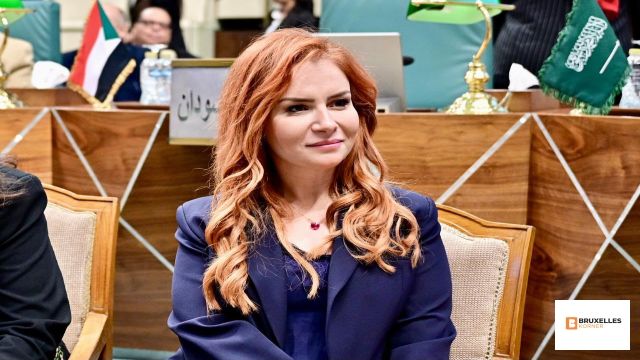
Noura Ali Al-Muraebi, expert in digital transformation and artificial intelligence governance, affirmed that the Arab Declaration on Tolerance and Peace puts the region before a new phase, titled the transition from declaration to impact-making, and from text to measurable practice, adding that tolerance is not merely a slogan raised on occasions, but a commitment to justice, respect for diversity, an ability to manage difference, and the shaping of an awareness that protects human dignity, and opens the way for dialogue and building a future that accommodates all.
This came in her speech during the Arab Conference on Tolerance and Peace, held at the Arab League, coinciding with the International Day for Tolerance, which witnessed the official launch of the Arab Declaration on Tolerance and Peace, in the presence of Ambassador Sheikh Mohammed bin Daij Al Khalifa, Assistant Secretary-General and Head of the Social Affairs Sector, Dr. Ahmed bin Mohammed Al Jarwan, President of the Global Council for Tolerance and Peace, the Permanent Representatives of member states and religious leaders, representatives of the Minister of Awqaf and the Egyptian Church, in addition to representatives of regional and international institutions and organizations and bodies concerned with dialogue and culture.
Al-Muraebi said that tolerance today is linked to digital presence, and to the ability to protect public space from hate speech, noting that technology has added a new dimension to the concept of tolerance, after it began to contribute to shaping perceptions, attitudes and decisions, and to affect the image of the other and the way of dealing with him.
Al-Muraebi warned that artificial intelligence can turn into a tool for amplifying hate speech, if left without responsible governance, just as it can turn into a force supporting education, research, media and capacity building, if it is well employed in accordance with the principles of the Declaration.

She explained that the speed of content spread and the ability of algorithms to generate texts, images and clips have made digital interaction more influential, which imposes an urgent need for responsible governance of artificial intelligence, clear policies, tools to measure impact, and linking the principles of the Declaration to daily practice.
Al-Muraebi called for using artificial intelligence tools in supporting decision-making, analyzing data, studying trends in public discourse, and helping researchers and media professionals examine sources, images and clips and verify them, and enhancing dialogue and educational practices, without technology replacing humans in judgment and assessment.
Al-Muraebi stressed that the real challenge is turning the Declaration into action, by linking its objectives to measurable indicators, identifying resources, timelines and responsibilities, and establishing mechanisms for follow-up, evaluation and correction.
She affirmed that legislation alone is not enough, and that capacity building, training, awareness, and linking programs to indicators are what give the Declaration its ability to continue and to have impact, calling for partnerships between governments, the private sector and civil society, and for localizing digital tools in a way that respects sovereignty, privacy and human rights, and limits complete dependence on external suppliers.
She concluded her speech by affirming that the value of digital transformation is not measured by the speed of tools alone, but by the justice of its decisions, the accuracy of its knowledge and the transparency of its practices, and that the Arab Declaration on Tolerance and Peace opens the door to a future in which technology transforms from a tool that may stir hatred into a means for making impact, and turning the principles of tolerance into a living practice in human life.
Yorum Yazın