





Amid calls to strengthen partnership
Arab League Launches 37th Session of Council of Arab Ministers Responsible for
the Environment Under Yemeni Chairmanship
Arab environmental action requires implementing actionable programs and projects and providing necessary financial and technical resources

Amr Yehia
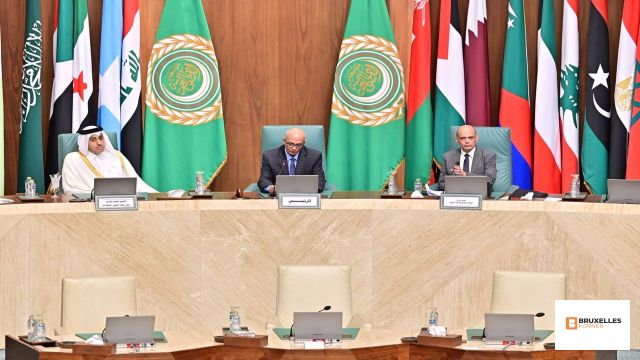
The General Secretariat of the Arab League in Cairo hosted the proceedings of the 37th session of the Council of Arab Ministers Responsible for the Environment, held under the chairmanship of Yemen. The meeting was chaired by Tawfiq Abdul-Wahid Al-Sharjabi, Yemeni Minister of Water and Environment, with the attendance of Ambassador Dr. Ali bin Ibrahim Al-Malki, Assistant Secretary-General and Head of the Economic Affairs Sector at the Arab League, alongside Minister Plenipotentiary Mahmoud Fathallah, Director of the Department of Environmental Affairs and Meteorology at the League.
In his opening address, Tawfiq Abdul-Wahid Al-Sharjabi, Yemeni Minister of Water and Environment and President of the current session, emphasized that the Arab region faces mounting environmental and developmental challenges, chief among them water scarcity, drought, desertification, biodiversity loss, pollution, and climate change. He noted that these challenges directly impact water and food security, development, and social stability. Expressing gratitude to Mauritania for its efforts during its presidency of the previous session, Al-Sharjabi highlighted that environmental issues are no longer isolated concerns but have become a core pillar of state security, societal stability, and the future of development in the Arab region.
He warned that climate change has become a tangible reality threatening food resources, requiring heightened coordination to formulate effective Arab positions in international forums. He stressed that raising climate ambition must be accompanied by fair, concessional financing, capacity building, and technology transfer to support developing nations. Highlighting the close nexus between water, agriculture, and the environment as an integrated system essential for safeguarding food and water security, Al-Sharjabi called for anchoring climate justice and considering the specific circumstances of the most vulnerable communities. Turning to the Palestinian cause, he underlined that environmental degradation resulting from conditions in the Gaza Strip and Palestinian territories has severely impacted water, soil, air, and natural ecosystems, necessitating the mobilization of support for recovery and ecosystem rehabilitation. He urged delegates to make this session a true turning point from consensus to practical implementation.
For his part, Ambassador Dr. Ali bin Ibrahim Al-Malki, Assistant Secretary-General and Head of the Economic Affairs Sector at the Arab League, affirmed that the upcoming phase of Arab environmental action demands a shift from formulating policies and commitments to implementing actionable projects and programs, supported by the necessary financial and technical resources. Welcoming participants, Al-Malki thanked Mauritania and congratulated Yemen on assuming the presidency, noting that for over three decades, the Council has served as the political and technical benchmark for joint Arab environmental action.

Al-Malki pointed out that 2026 marks significant international momentum, offering Arab states an opportunity to highlight their priorities. He cited the General Secretariat's engagement in the COP17 Desertification Conference in Mongolia, congratulated Egypt on hosting COP18 in 2028, and noted preparations for participation in the COP17 Biodiversity Conference in Armenia and COP31 Climate Conference in Antalya next November, where an Arab Climate Pavilion will be organized. He explained that the Council selected "Rangeland Sustainability for Enhanced Resilience" as the theme for the current session, coinciding with the International Year of Rangelands and Pastoralists 2026, given its vital role in food security and rural livelihoods. Al-Malki reiterated the League's commitment to raising Palestinian environmental concerns in international arenas and supporting the Palestinian Environmental Quality Authority, alongside aiding countries facing exceptional environmental crises—such as Yemen, Syria, Lebanon, Sudan, Somalia, and Libya—and host nations accommodating large refugee populations. He expressed confidence that the session’s outcomes will significantly strengthen Arab solidarity and advance the region's environmental and developmental interests.
The Council discussed a comprehensive draft agenda organized under two main pillars. The first pillar covers follow-up on international environmental agreements and summits, primarily the outcomes of the 24th meeting of the Arab Team on Biodiversity and Desertification, the results of the UNCCD COP, nature-based solutions, the water-agriculture-environment policy nexus, and treaties on chemicals, waste, and ozone layer protection. It also encompasses coordinating the Arab negotiating stance ahead of the COP31 Climate Conference, as well as preparations for the Arab Forum for Sustainable Development, the High-Level Political Forum, and the UN Environment Assembly. The second pillar addresses regional Arab environmental matters, including the Arab Environment Forum, the Arab Environment Facility, the environmental situation in Palestine and crisis-affected Arab nations, the selection of the Arab Environment Capital, the Council's award, proposed themes and slogans for Arab Environment Day in 2027 and 2028, the Arab Region Environmental Outlook report, the blue economy, and international cooperation frameworks.
Yorum Yazın