




Under President Sisi's Patronage, Egypt Forum 2026 Kicks Off to Chart Post-IMF Economic Future and Human Development Agenda
Cairo , Amr Yehia
Egypt Forum 2026 opened its
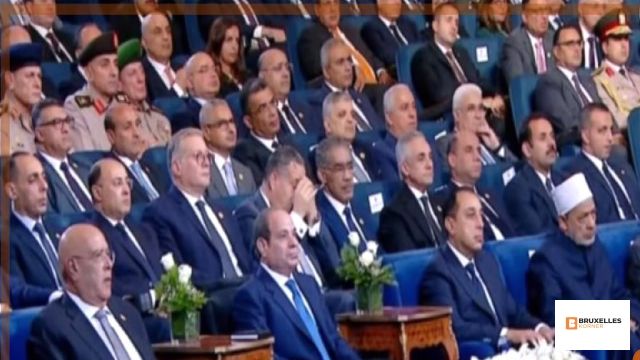
sessions today at the St. Regis Hotel in the New Administrative Capital, in the presence of President Abdel Fattah El-Sisi, Prime Minister Mostafa Madbouly and more than 150 ministers, decision-makers and specialists, alongside 8,000 participants from diverse sectors.

Held under the theme "A Look at Today, A Vision for Tomorrow,"the six-day forum, running until 24 October, was called for by President El-Sisi with a direct mandate: to institutionalize open public dialogue, listen to citizens' daily concerns, and collaboratively define national priorities for the next phase.
The forum is built on four main pillars: human development; integrated development and quality of life; social protection and security; and the economy. It features more than 16 interactive dialogue sessions, specialized workshops and expert panels.
The opening day, themed "Building the Human Being, puts human capital at the center of Egypt's economic competitiveness.
The day started with an official opening ceremony, followed by a high-level roundtable: "What Do Our Children Learn..and Does It Prepare Them for the Future?". The session marks a strategic shift in state policy – from expanding access to education to improving its quality and relevance, with focus on curricula reform, teacher development, student evaluation, and integrating future skills including digital literacy, AI, financial literacy and entrepreneurship. A second part of the roundtable discusses linking university programs, research and innovation to labor market needs.
Followed by a core session on youth empowerment: "Youth and Sports: From Providing Opportunities to Creating Impact," which examines talent discovery, training, sports, innovation, and transforming youth ideas into tangible projects and startups. The session also highlights the role of SMEs and entrepreneurship in job creation and broadening the productive base.
On the economic front, Day One includes two closed workshops of high priority to citizens: the first on "Controlling Prices and Markets" to address immediate cost-of-living concerns, and the second on "The National Economic Transformation Program"– the government's post-IMF strategy currently being finalized.
The forum comes at a critical juncture as Egypt prepares for the end of its IMF Extended Fund Facility (EFF) program in December 2026. Prime Minister Madbouly has stated the government does not intend to seek a new IMF financing program.
The new National Narrative for Economic Development, aligned with Egypt Vision 2030, aims to translate macroeconomic stabilization into sustainable growth, with targets of over 7% annual growth and raising the private sector's contribution to over 65% by 2030.
This will be implemented through the State Ownership Policy 2026-2030, which includes 9 pillars, 31 programs and around 100 executive actions for restructuring and divestment of state-owned assets, alongside priorities in energy, food security, ICT, renewable energy and rare minerals. Fiscal consolidation, exchange-rate flexibility, and improving the business environment remain central.
The first day concludes with a reflective panel: "Culture and the System of Social Values," tackling the gap between stated values and actual behavior, the impact of social media, and the role of state, religious, cultural and educational institutions in reinforcing shared values.
The forum also spotlights inclusion through the initiative "Like the Sun... An Opportunity for Every Child" for children with mild-to-moderate disabilities, linking social protection to economic productivity and better use of human capital.
According to its official platform launched for citizen participation, the forum seeks to bridge government, private sector, academia and civil society, promoting public-private partnerships to mobilize resources for education, human development and social protection.
Its success, observers note, will be measured not by the breadth of discussion, but by whether dialogue translates into clear responsibilities, measurable KPIs, and tangible progress in attracting investment, expanding exports, and creating productive employment.
Yorum Yazın