





MIHAS 2026: A Strategic Gateway to Strengthening Economic Partnership Between Egypt and Malaysia
Halal Economy and AI: MIHAS Drives Egyptian Exports to ASEAN Markets
Economic Synergy to Explore Joint Ventures, Supply Chain Integration, and Bilateral Investment
Amr Yehia

Egyptian-Malaysian relations stand today as an inspiring model of South-South cooperation, built on a historical foundation of shared heritage, mutual political trust, and rapidly growing economic and cultural integration. From the early intellectual exchanges that predated Malaysia’s independence to modern strategic joint investment projects, Cairo and Kuala Lumpur continue to fortify an alliance that directly bridges the Arab World and Southeast Asia.
The institutional roots between Cairo and Kuala Lumpur date back to the formal establishment of diplomatic relations in 1959, following Malaysia's independence. However, the core foundation of Egyptian-Malaysian ties predates formal diplomacy by decades. In the 1930s, the Egyptian community played a transformative role in shaping Malaysian thought, driven by a steady influx of Southeast Asian students and scholars coming to study at Al-Azhar University in Cairo. In a diplomatic gesture reflecting enduring bonds of friendship in 1959, Egyptian President Gamal Abdel Nasser presented a dedicated Cairo headquarters to the Malay Students Association in Egypt, laying solid cultural roots that later bore fruit with the opening of the Egyptian Embassy in Kuala Lumpur and the Malaysian diplomatic mission in Cairo by 1960.
Political consultations between the two capitals have gained unprecedented momentum, characterized by high-level exchanges of visits and close alignment on visions and positions within international organizations. Mutual visits between the Egyptian leadership and Malaysian heads of state have consistently emphasized shared priorities regarding regional stability, maritime security, and economic cooperation. Cairo has always highlighted its standing as a primary economic and commercial gateway for Malaysia into Africa, while Kuala Lumpur views Egypt as a pivotal partner for regional diplomacy in the Middle East.
On the economic front, bilateral trade links reached a landmark milestone in 2025 by recording a peak trade volume of $718 million. The structure of this trade exchange is moving rapidly from raw commodities toward advanced industrial technology and joint manufacturing, with both countries targeting an annual growth rate of 10% to 15%. Malaysian exports to Egypt are increasingly dominated by Tier-1 and Tier-2 automotive components, semiconductors, electrical and electronic systems, green building materials, and high-value palm oil derivatives. In return, Egyptian exports provide vital support to Malaysia’s agricultural and energy sectors through major shipments of fertilizers, agrochemicals, natural phosphate, citrus fruits, dates, and petroleum derivatives.
The opening of the $35 million "Proton Saga" Completely Knocked Down (CKD) automotive assembly plant in Giza Governorate marks a milestone in this economic partnership. The facility meets local market demand while positioning Egypt as a re-export platform toward North Africa and Sub-Saharan African nations under the African Continental Free Trade Area (AfCFTA). This project supports a broader "Dual Gateway" framework: granting Malaysia tariff-free access to African markets via Egypt, while offering Egyptian exporters access to Malaysian ports for goods distribution across the 600-million-person ASEAN market. Reinforcing energy cooperation, Malaysian energy giant Petronas maintains long-term investments in Egypt's natural gas sector alongside growing commercial interest in the Suez Canal Economic Zone (SCZONE).

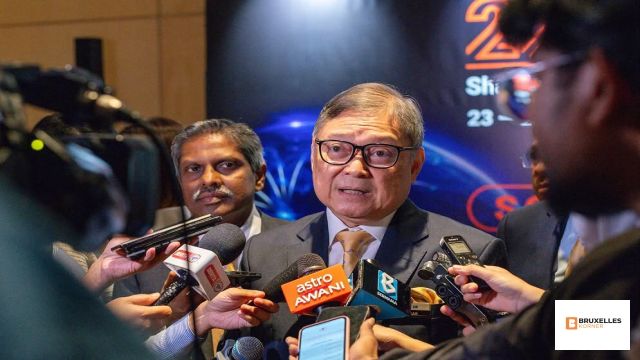
CEO of MATRADE’s : Dato' Indera Abu Bakar Yusof
As Egypt moves forward with major urban development projects, including the New Administrative Capital, the Malaysia External Trade Development Corporation (MATRADE) is steering Malaysian firms away from traditional foreign contracting toward strategic partnerships and joint investments. Malaysian enterprises are bringing their specialized expertise, targeting key contributions in green building materials, desert climate insulation, and IoT-enabled smart transit software. To mitigate global foreign exchange constraints and customs hurdles, both nations are introducing targeted regulatory solutions. Institutional dialogues focus on establishing local currency trade settlement mechanisms, blockchain-based digital trade corridors to cut paperwork, and formalizing mutual halal certification recognition between Malaysia’s JAKIM and Egyptian authorities.
MIHAS 2026: Strengthening Economic Partnership with Egypt
Egypt is set to participate in the 22nd edition of the Malaysia International Halal Showcase (MIHAS), scheduled for September 23–26, 2026, in Kuala Lumpur. For the first time, the exhibition will feature artificial intelligence applications and directly connect Egyptian delegations in pharmaceuticals, cosmetics, and processed foods with international buyers through MATRADE's International Sourcing Programme (INSP).
Hosted by the Ministry of Investment, Trade and Industry (MITI) and organized by MATRADE, MIHAS 2026 represents a major qualitative shift for the global halal economy ecosystem. MIHAS 2026 focuses on integrating trust, governance, and technology into cross-border trade, presenting artificial intelligence as an independent sector for the first time to reflect a modern vision of digital trade. Alongside the flagship INSP program, the showcase gathers thousands of international exhibitors, trade visitors, and global buyers from over 80 countries at the Malaysia International Trade and Exhibition Centre (MITEC) in Kuala Lumpur. Through pre-arranged business matching sessions, targeted industry panels, and specialized forums, MIHAS 2026 continues to bridge emerging halal markets across Africa, the Middle East, and Southeast Asia with high-value supply chains encompassing pharmaceuticals, modest fashion, green technology, and organic agriculture.
The 2026 event builds directly on the historic momentum of previous editions, particularly MIHAS 2025, which achieved record export sales of MYR 4.97 billion (over $1.1 billion). The exhibition has evolved from a traditional trade show into a year-round global sourcing hub, exemplified by the launch of MIHAS Dubai and initiatives like the Women in Export (WiEX) platform.
By connecting local SMEs to multinational procurement chains, recent editions have consistently exceeded trade targets. Across core focus areas such as Islamic finance, halal cosmetics, sustainable packaging, and tech-driven food safety, MIHAS has solidified its role as a key catalyst for facilitating business deals and investment flows between OIC member states and global trade partners.
Since its launch in 2004, MIHAS has served as a primary cornerstone of Malaysia's economic development strategy, successfully positioning the country as an undisputed global hub for the $3 trillion halal economy. Throughout its history, the exhibition has generated tens of billions of Ringgit in cumulative trade sales, directly supporting Malaysia’s domestic manufacturing sector, expanding non-commodity exports, and attracting sustained foreign direct investment to specialized halal industrial zones. Beyond direct trade figures, the showcase has played a pivotal role in establishing JAKIM halal certification as the world's most trusted regulatory standard, setting a benchmark for quality and safety. By mainstreaming halal into a global standard for sustainable and ethical trade, the showcase has significantly bolstered Malaysia's commercial influence and expanded its trade integration across ASEAN, Africa, and global markets.
Yorum Yazın